~ AN AFROCENTRIC GATEKEEPERS PALACE FOR INFORMATION ~


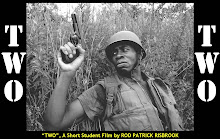
Otta Benga, Formerly Enslaved
The Epitome of a Nubian Knight

Otta Benga, Formerly Enslaved<br>The Epitome of a Nubian Knight

Followers of Nubian Knights Network
"Thanks For The Support Everybody!!!"

QUOTATIONS OF "BLACK"

"Whenever I use BLACK it relates to some history of Africans in that particular place. It’s the idea of the color BLACK as a metaphor, or as a representation of African-Americans. It’s the notion of BLACK- BLACKNESS - and all its other meanings in relation to the history of race..."

- Fred Wilson


"Most of my fortitude to continue doing the work comes from the moral outrage I feel about the injustices that Black people endure disproportionately daily."

- N. Abdul-Wakil


"In the end, what matters is not skin shade but pan-African consciousness. Loving your complexion, your nose, lips, hair length and texture, no matter what the politics or trends decide, and simply be. That's the problem with us (African folks). We're still learning how to love ourselves. So used to glorifying others and putting others first..."

- Dredlocks Tree

The REEL Black Same Gender Loving Filmography Resource (A 24/7 ONLINE FILM DATABASE)

The REEL Black Same Gender Loving Filmography Resource (A 24/7 ONLINE FILM DATABASE)
Click The Pic To Access The Film Library Database! (166 Films)
LAST UPDATE: Monday, December 3rd, 2012
Showing posts with label African Heritage. Show all posts

Monday, April 15, 2013

The Kinsey Collection
Where Art and History Intersect
African History & Heritage


We strive to live our life guided by two principals: to whom much is given much is required, and a life of no regrets. We are compelled to give back, so we set about to document the African American experience through original documents, manuscripts, photographs, paintings and sculptures.

Our intention is that this work allows people to develop a deeper relationship to the pieces in our collection that bring African American history to life. Having that connection with the past creates this sense of strength, identity and lineage that is so powerful in each of us.

- Bernard and Shirley Kinsey


VIDEO: The Kinsey Collection Introduction


About The Kinsey Collection...

The Bernard and Shirley Kinsey collection contains a wide range of art and artifacts that bear witness to the multilayered intersections of the past and present. From a curatorial perspective, the correlations of seemingly disparate objects and their historical moments are both purposeful and necessary to form a holistic understanding of the Kinsey's mission. In aggregate, these intersections that are sometimes confrontational become a celebration of the diversity of African and African American experience in the world.

Very little is consoling about the artifacts that are contained in the collection. The context of each piece is complex, giving light to the difficulties of being black, and also, illuminating the brilliance, sometimes tragic, of exceptional people whose contributions add enduring force to the often undervalued collective history of a people. 


Buy The Book...

 
Official Website: www.TheKinseyCollection.com

- 
The Kinsey Collection:
Shared Treasures of Bernard and Shirley Kinsey

Where Art and History Intersect


Sunday, September 11, 2011

17th Commemoration of THE MAAFA
Featuring The MAAFA Suite...
A Healing Journey
September 12th-24th, 2011
Brooklyn, NYC


Official Website: www.themaafa.com


ST. PAUL COMMUNITY BAPTIST CHURCH
859 Hendrix Street
(Between Linden Blvd & Stanley Avenue)
Brooklyn, New York 11207
GOOGLE MAPS


TRAIN TRAVEL:
#3 Train To Van Siclen Avenue


Presents

The 17th Commemoration (2011)
of
THE MAAFA

SAVE THESE DATES:
SEPTEMBER 12th - 24th ,2011


Rev. David K. Brawley, Senior Pastor
Rev. Dr. Johnny Ray Youngblood, MAAFA Founder
Yvonne L. Hildmon, Fiscal Coordinator


Events:
Baby Dedication
MAAFA Museum Tours* (School Tours Sept. 12th -16th)
Meditative Moments
Oceanside Ceremony
Develpoing Your Own MAAFA Commemoration (pre-registration required)


The MAAFA Suite...A Healing Journey
Directed by Michele Hawkins-Jones
Performances:
September 18th, 2011 at 6:00 P.M.

September 19th, 22nd and 23rd, 2011 at 7:00 P.M.
Excerpts: September 21st, 2011 at 3:00 P.M.

Ticket Prices:
Mezzanine Sanctuary Seating: $30.00
Orchestra Sanctuary Seating: $50.00


*For additional information contact the
MAAFA Resource Center
(718) 257-2884 or (718) 257-1300 exts. 178 or 174
Email us at maafa[at]spcbc.com

Visit our websites at
www.themaafa.com or www.spcbc.com


Official Website: www.themaafa.com

MAAFA is a Kiswahai term which refers to the catastrophic experience formerly known as the TransAtiantic Slave Trade which resulted in the kidnap, torture, and enslavement of millions of African people.


The Paths To Which Enslaved Africans
Were Brought To The Americas
(Click The Picture To Enlarge The Map)


Monday, December 20, 2010

44th Anniversary KWANZAA Celebration
With KWANZAA Creator Dr. MAULANA KARENGA
Monday, December 27th, 2010
5:30PM - 9:30PM

The New York Chapter of the
National Association of Kawaida Organizations (NAKO)
presents a
44th Anniversary Kwanzaa Celebration
with Dr. MAULANA KARENGA
this year's message
Kwanzaa and the Nguzo Saba:
An Ethics of Sharing Good in the World


At Boys & Girls High School, on Monday, Kujichagalia (Self-Determination), December 27, 2010, the creator of Kwanzaa, Dr. Maulana Karenga will address this year's theme.

TIME: 5:30PM - 9:30PM

BOYS & GIRLS H.S. located at 1700 Fulton St., in Brooklyn (between) Utica and Schnectady Aves.) 11226.

$10.00 Admission $7.00 Seniors & Children

Trave: "A" or "C" train to Utica Avenue

GOOGLE MAP


"...Kwanzaa brings a cultural message which speaks to the best of what it means to be African and human in the fullest sense."
Dr. Maulana Karenga
(quote from the Founder's 2010 Welcome statement)

Cultural entertainment will be provided by the Universal African Dance and Drum Ensemble as well as vocalist Camille Yarbrough and Zahmu/Threee

The New York Chapter of the National Association of Kawaida Organizations (NAKO)
presents a
44th Anniversary Kwanzaa Celebration
with
Dr. MAULANA KARENGA
this year's message
Kwanzaa and the Nguzo Saba:
An Ethics of Sharing Good in the World

At Boys & Girls High School, on Monday, Kujichagalia (Self-Determination), December 27, 2010, the creator of Kwanzaa, Dr. Maulana Karenga will address this year's theme.

TIME: 5:30PM - 9:30PM


BOYS & GIRLS H.S. located at 1700 Fulton St., in Brooklyn (between) Utica and Schnectady Aves.) 11226.

$10.00 Admission $7.00 Seniors & Children


"...Kwanzaa brings a cultural message which speaks to the best of what it means to be African and human in the fullest sense."

Dr. Maulana Karenga
(quote from the Founder's 2010 Welcome statement)

Cultural entertainment will be provided by the Universal African Dance and Drum Ensemble as well as vocalist Camille Yarbrough and Zahmu/Three


KWANZAA
A Celebration of Family, Community and Culture


Dr. Karenga is Professor of Africana Studies at California State University, at Long Beach. He is also chair of the Organization Us and the National Association of Kawaida Organizations. He has been an activist scholar since the 60s especially in such educational and social movements as Black Studies, Black Power, Black Arts, independent schools, Afrocentricity, ancient Egyptian Studies, Ifa ethical studies, the Million Person Marches and Reparations. He is the author of numerous books, some including Kwanzaa: A Celebration of Family, Community and Culture; Kawaida and Questions of Life and Struggle,and; Introduction to Black Studies as well as numerous articles. He has earned two Ph.D.s, one in social ethics (University of Southern California, and the other in political science (U.S.International University).


Friday, November 12, 2010

Digital Diaspora Family Reunion (DDFR.tv)
Website Launch by Chimpanzee Productions, Inc


Official Website: www.DDFR.tv


About

Digital Diaspora Family Reunion: One World, One Family™


DDFR is a multimedia community engagement initiative where individuals are invited to explore the rich and revealing historical narratives found within their own family photograph collections. The highlight of the initiative includes a touring DDFR Roadshow, combining the best features of PBS’ “Antiques Roadshow” and National Public Radio’s “StoryCorps,” that activates Black family photographic archives; and DDFR.TV, an online Portal that creates community across time and space. DDFR brings to the forefront stories and histories suppressed and/or hidden that show the fullness of Who We Are. By uncovering the little known history of our African American and African Diasporic families and relatives, this important and timely project provides a gathering place where all these lost, neglected and discarded shards of history can once again be seen, shared and appreciated. The goal of the DDFR initiative is to break down barriers between people and bring them together around the cultivation of their shared values and experiences. Conceived and founded by Chimpanzee Productions, Inc., with support from National Black Programming Consortium, Corporation for Public Broadcasting, Cross Currents Foundation, Fledgling Fund, Nathan Cummings Foundation and others, DDFR.TV hopes to become the premiere web portal at the intersection of Black photography and the past, present and future of the African Diaspora.

Saturday, September 4, 2010

Through The Ages: Our Journey Through Music
A Concert Chronicling The African American Experience From 1930 - 2010 Through Song


Click Image To Enlarge


The Fire This Time Festival and Horse Trade Theater Group

present

THROUGH THE AGES
Our Journey Through Music

A Concert Event


The Kraine Theater
85 East 4th Street
(Between Bowery and 2nd Avenue)
New York City
GOOGLE MAP

Sunday, September 12th, 2010
4:00 PM

Tickets $25
Buy Tickets Here
Donations Welcome

Proceeds to benefit the artists in year two of the
Fire This Time Festival of Short Plays.


e-mail:
FireThisTimeFestival[at]gmail.com


About the Festival
www.horsetrade.info/index.htm


THROUGH THE AGES
Our Journey Through Music

Steve Strickland
Host

Featuring the musical talents of

Travis Allen, Kristopher Jean, Chris Marcus,
Royale Mosley, P. Murray, LeeAnet Noble

Femi Shiri, J. Stone, Robert Urban, and Christine Yarde

Musical Director/Arranger
Germono Toussaint


About The Fire This Time Festival...
The Fire This Time Festival showcases new short plays
from talented writers of African descent.
The Festival explores the diverse possibilities of
contemporary American drama and challenging new directions
for 21st century black theatre.


Year One Playwrights:
Asiimwe, Radha Blank, Kelley Girod, Katori Hall,

Derek Lee McPhatter, Germono Toussaint, and Pia Wilson

Year Two Playwrights:
Jesse Cameron Alick, Christine Chambers, Camille Darby,
Marcus Gardley, Yusef Miller, and Dominique Morisseau


Production Partners
A Mile in My Shoes, Inc.
Under the Spell Productions, Inc.

Monday, August 9, 2010

16th Commemoration of THE MAAFA
Featuring The MAAFA Suite... A Healing Journey
September 13th-25th, 2010
Brooklyn, NYC


Official Website: www.themaafa.com


ST. PAUL COMMUNITY BAPTIST CHURCH
859 Hendrix Street
(Between Linden Blvd & Stanley Avenue)
Brooklyn, New York 11207
GOOGLE MAP


TRAIN TRAVEL:
#3 Train To Van Siclen Avenue


Presents

The 16th Commemoration (2010)
of
THE MAAFA

SAVE THESE DATES:
SEPTEMBER 13th - 25th ,2010


Rev. David K. Brawley, Senior Pastor Rev.
Dr. Johnny Ray Youngblood, MAAFA Founder

Kim D. Jones, Administrative Coordinator
Yvonne L. Hildmon, Fiscal Coordinator


Events:
Baby Dedication
MAAFA Museum Tours* (School Tours Sept. 13 -17)
Meditative Moments
Oceanside Ceremony


The MAAFA Suite...A Healing Journey
Directed by Michele Hawkins-Jones
Performances:
September 19th at 6:00 P.M.
*
September 20th, 23rd and 24th at 7:00 P.M.*

Ticket Prices (Tentative):
Orchestra Sanctuary Seating: $50.00
Mezzanine Sanctuary Seating: $30.00


Featured Presenters:
Dr. Edward M. Bostick,
Quiltmaker and Historian, Brooklyn, New York


Tom Burrel
l,
Author, Chicago, Illinois

Dr. Scott Christianson,
Writer and Human Rights Activist Albany, New York

Dr. Ron Daniels,
Institute of the Black World 21st Cer)tury, East Elmhurst, New York


Karen Hunter,
Joumalist Author and Publisher, South Orange, New Jersey


Dr. Edwin Nichols,
Clinical Industrial Psychologist, Washington, DC

Rev. Dr. Lewis T. Tait, Jr.,
Imani Christian Center, Stone Mountain, Georgia

Dr. Jonathan L. Walton,
Harvard Divinity School, Cambridge"Massachusetts


Time Wise,
Author and Anti-Racist Activist Nashville, Tennessee


*For ticket prices and additional information contact the
MAAFA Resource Center
(718) 257-2884 or (718) 257-1300 exts. 178 or 174
Email us at maafa[at]spcbc.com

Visit our websites at
www.themaafa.com or www.spcbc.com


Official Website: www.themaafa.com

MAAFA is a Kiswahai term which refers to the catastrophic experience formerly known as the TransAtiantic Slave Trade which resulted in the kidnap, torture, and enslavement of millions of African people.


The Paths To Which Africans Were Brought To The Americas
(Click The Picture To Enlarge The Map)

Friday, July 30, 2010

The Legacy of El Hajj Malik El Shabazz Lives!
An Interview With His Grandson Malcolm Shabazz


The Legacy of El Hajj Malik El Shabazz lives!
An interview With His Grandson Malcolm Shabazz

July 22, 2010
by POCC Minister of Information JR


Feb. 21, 1965, the late great El Hajj Malik El Shabazz aka Malcolm X was assassinated in front of his family by agents of the U.S. government, in front of his daughters and his pregnant wife, and in front of the world with photos of his body all over the media the next day. This was a move by COINTELPRO to silence one of the strongest and most effective revolutionary voices of Black people in the U.S. to date.

After his spirit passed on, his writings and teachings really took root in the minds of a new generation even to the point of inspiring young Black people in Oakland to create an organization later known as the Black Panther Party. Forty-five years later, his first male heir and grandson, Malcolm Shabazz, has come to the Bay to speak and take in the politics of the Bay Area for the first time. This is an interview that we recorded a few weeks prior to him touching down. Here he is in his own words …

MOI JR: You are listening to another edition of POCC Block Report Radio with Minister of Information JR. Today my honored guest is Malcolm Shabazz, otherwise known as the grandson of the late great El-Hajj Malik El-Shabazz, otherwise known as Malcolm X. How are you, Malcolm?

Malcolm Shabazz: I’m good, thank you. I’m honored for this opportunity to speak with you.

MOI JR: Man, I’m honored to have you on here. Well, just to kick it off, man, because this is the first interview I’ve done with you and I haven’t seen too many other interviews done with you. Can you tell us what it is like to be the grandson of the late great Malcolm X aka El-Hajj Malik El-Shabazz?

Malcolm Shabazz: I feel just like everybody else, but at times it can seem to be a blessing and at other times it can seem to be a curse, depending on the situation. A lot of people love me and there are also those that hate me. Most of the people that hate me are because they don’t know me or they’re ignorant to certain issues or they listen to the media or certain articles that are written about me by people that don’t know me.

It can be a lot of pressure at times. Like growing up, I was placed in many situations where, say, one person, you can invite them to your house and they might throw up on the carpet. You say, oh they threw up and you help them to clean up the mess. But me, you know, I was under a magnifying glass or a spotlight. So say if I spit on the sidewalk, everyone would be like hey, what the hell is wrong with him?

It’s been a curse in certain situations, dealing with police, certain politicians and government officials. But it has also been a blessing being able to network with other revolutionary spirited individuals that are people that help to put me on to things and gain awareness.

MOI JR: Can you talk a little about your family life? Were you sheltered because of who your grandparents were?

Malcolm Shabazz: I was sheltered early on up until about the age of 9. I was raised in a family of all women. So at a certain point in my life, I started to rebel because there was no real male influence or father figure around. The closest thing I could see that represented strength to me were the cats you would see out on the corner. They were either drug dealers, gang bangers or whatever but those were the only males I could identify with that represented strength that I could immediately seek right there out in the community, so I kind of gravitated towards that. I went through a rebellious phase early on in my life, but prior to that I was somewhat sheltered.

MOI JR: How old are you now and where did you grow up?

Malcolm Shabazz: Right now I am 25 years old and I grew up all over the United States of America. I was born in Paris, France, and came to the states when I was about 3 years old. From there, I have lived in Philadelphia, California, different places in New York, Minnesota, Texas and many other different places. Right now I am in Miami, Florida. I have spent some time recently overseas studying.

MOI JR: When you were younger, you were accused of lighting the fire that killed your grandmother, Betty Shabazz. Can you talk a little about that incident, as well as the media portrayal of it?

Malcolm Shabazz: At a young age, I was about 12 years old and my mother was dealing with a case against the federal government for allegedly hiring a hit man to assassinate Nation of Islam leader Louis Farrakhan. During this time, it was a real tense climate and there was so many things going on with my family. I didn’t really understand everything at that age. I couldn’t be with my mother and I really wanted to be with her and I couldn’t understand why I couldn’t be with her.

So back in New York, not knowing where my mother was and being concerned and worried about her, I started to act out and do anything I could to be sent back to my mother, not understanding the ramifications of all my actions. I started to steal money, steal cars, run away from home and unfortunately one of the last things I did was set this fire.

The reason why I did these things was because I wanted my family here in New York to take the position, “He is out of control. We can’t control him so let’s send him back to his mother.” That was my logic. But when I got the idea to set this fire, I set it and didn’t have any intention to harm my grandmother. It was my intention to be mischievous to be sent away back to my mother but it wasn’t my intention for anyone to get hurt. My grandmother got hurt in the process and she ended up losing her life and it is something I deeply regret.

Me and my grandmother had a strong relationship. We probably had the strongest relationship than anybody else in my family. I loved her a lot and she loved me a lot. I was one of her favorites, you know.

The media portrayed it as it was something that I did purposefully or however they portrayed it. But that was not the case. That’s not what it is. I have even gave interviews in the past and after the interview they have stated that I expressed no remorse. Like I didn’t care, which is not true. This is my grandmother and I loved her deeply. To even have a grandmother pass away, of course, it hurts. But to have her pass away based on the actions that I took is even worse.

For a long period of time, I was just lost. I couldn’t speak to people. The media was coming at me from all of these different directions. All these people were trying to profile me and exploit me.

But basically with that situation, I set the fire to be mischievous to get sent back to my mother and didn’t intend on anyone getting hurt in the process. She ended up losing her life. I deeply regret that. Actually, it is the only regret I have in my life out of all the other mistakes that I have ever made.

MOI JR: Can you talk about your most recent case and what happened?

Malcolm Shabazz: Back in 2002, I was 17 years old and I was at a party in Middletown, New York. There was an individual who was a gang member and a drug dealer who tried to rape a 12-year-old girl. I defended the girl, resulting in an altercation taking place. This individual that I had the altercation with ended up in the hospital.

When I went to court, they didn’t let the girl testify, so it was almost like the rape incident didn’t take place. They didn’t let her testify because she was underage and her parents didn’t want her involved. So her testimony wasn’t admissible. The guy, despite the fact that he was a drug dealer or whatever, they just looked the other way.

I was in a town which was in Upstate, New York. It’s in an all-white area. When it came down to it, it was time for me to go to court. The thing was, was that I was facing all these charges. I was facing kidnapping, burglary, robbery and possession of a weapon. They listed me with all these charges, even though, like possession of a weapon, I had no weapon. You know, certain things they just listed it so they would have it.

So basically, when it came down to it, it’s time to go to court and I’m facing 56 years. My lawyer is asking me, “What do you want to do?” I asked him, “What are my chances of beating this case?” They say 50-50 based on certain things – 50-50 on 56 years? I was not really trying to take the risk.

So they also tell me, the jury could think that they were doing you a favor by letting you off on certain charges and sticking you with one or two. But by that you could still end up with 14 years. So they gave me a plea bargain of two and a half years. I took the two and a half years even though I wasn’t guilty of what they were asking me to admit to, which was a robbery. There was no robbery that ever took place. They asked me to admit to this in order to get this two and a half years. So I took that and they told me to return in 45 days to turn myself in.

Unfortunately, when the 45 days came, I didn’t run but I couldn’t bring myself to turn myself in either. So they ended up catching up with me and added on an extra year and a half. So I ended up with three and a half years. And after I was in the system, I had problems with the police and the racist COs (correctional officers) up north. Of my three and a half years, I ended up doing all of it. I came home on parole and the parole thing was not working for me. I couldn’t last too much in the streets on parole. They kept sending back, sending back. One time they sent me back for a year in the Athens State Correctional Facility for being a half an hour late from coming home from school.

MOI JR: Wow! Well, I think you hit on it a little bit, but can you hit it direct: How were you treated by the police specifically with you being the grandson of Malcolm?

Are you the sole male heir and, if you are or not, can you tell us how law enforcement treats you specifically in prison and on the streets?

Malcolm Shabazz: No, I am not the sole male heir, but I am the first male heir. I have a little cousin named Malik Shabazz. He is 20 years old right now.

When I was in prison, it was interesting because when you first go in, in New York City, like Rikers Island or any prison close to the city, the majority of the COs are going to be Black and Spanish. But then they also have the prisons that are way up in the mountains close to Canada, like Attica, Comstock, Great Meadow, where all the police are from the communities up there, so they are all white.

All white, 100 percent – people that have never been to the city before in their life. It’s about probably six to nine hours away from New York City. They’ve never seen so many Black and Spanish people except for where they work as prison guards in the jail. So the mentality that they have with us is that we are animals.

They wouldn’t keep me in a prison where there were all Black and Spanish COs because if they kept me in a prison like this they were more inclined to treat me like a human being. So what they would do was they would try to break me. When I first went into a correctional facility, I was 17 years old. They put me straight into a maximum security prison and gave me the highest security classification possible. I was classified with like drug kingpins, terrorists, things of this nature. I’m only 17 years old. So I was placed in prison with individuals that were never going home. They have life. They did this as an attempt to break me, but it only made me stronger.

Now when I went up there, one of the things I noticed up north was that you have red-neck racist pigs that have tattoos of Black babies hanging from trees. I couldn’t imagine it. How is it possible that they are allowed to work here? How is this allowed? How is this permitted?

If you are not a racist, you could go into that environment and definitely become a racist because it is a different energy. These pigs would line up and have their sticks out and they would threaten you and taunt you, waiting for you to do something. They would have this deep hatred in their eyes with the veins popping out of their neck. That was the type of environment I was in. So I ended up having a few altercations with the police.

Another thing I noticed was that they had this divide and conquer tactic where they had the inmates fight each other in order to keep control. It’s more of us than them but in order for them to keep control, they got to throw all of these things in the mix in order for us to fight each other.

So when I got there, certain things I noticed and I spoke on these issues and I got some of the inmates to come together and we developed a little more unity and strength in there. When we would walk up the hallway, there wasn’t no more mean mugs; it was Black Power fists.

MOI JR: That’s the business.

Malcolm Shabazz: I basically got set up by the police two times. Ended up having some physical altercations with them and they sent me to the box. They jumped me and sent me to the box. Tried to keep me in there indefinitely, extend my time. Most of my stay in prison, all of my problems, were with the police, never with any of the inmates.

MOI JR: How did the inmates treat you?

Malcolm Shabazz: The inmates treated me with a lot of respect. There are two times in my life where I really understood more of who my grandfather was and the legacy I represent.

One time was when I was 9 years old and I was in North Philly and I got robbed for some money. I was like 10 years old. One of the local kids had robbed me for some money I had. He didn’t know who I was. I told a Muslim sister about it and she made a phone call.

Thirty brothers came and asked me what happened. They were organized and I told them what happened. They went out and said they’ll be back. They went out and came back with more money than the kid took. The next day I saw the kid, who was about 16 or 17 years old. He apologized and said if there was anything I needed, he had my back. That was one time when I was like, hold on. I really didn’t understand because I was like 10 and really didn’t realize what all of this was about.

The second time was when I went to prison. I went to prison, and you would be surprised that people think everybody in prison is an animal, thug or gangsta. But some of the most intelligent people, some of the most intelligent brothas I met in my life were in prison. I don’t even regret the experience of being there. While I was there, it was rough, it was difficult. But after going through it, I’m glad that I met some of the brothas that I met who really put me on and had me reading certain books and they showed me a lot of love.

MOI JR: When were you unleashed and what have you been up too since?

Malcolm Shabazz: I was released Dec. 24, 2008. That’s when I maxed out and all my time was done. The leash was taken off of my neck and it’s interesting because even when I was on parole, every two months they would find an excuse to lock me up. I didn’t even have to commit a crime. Then they would write about it in the paper and make it seem like I was out there ripping and running reckless, which wasn’t the case. But since I have been off of parole, out of the system completely, I’ve been doing real good.

I got out Dec. 24, 2008, and from there I went to spend time with my aunt in New York, Ilyasah, and we went to Qatar, like three weeks later we went to Doha, Qatar, in the Middle East for a Muslim Leaders of Tomorrow conference. I networked, made a lot of good contacts. I came back for a little bit and then I decided to go overseas and study a little bit more. So I went to Damascus, Syria, and I studied there for about a year. I actually just came back from there on April 9. I had a good time. It was a wonderful experience. I was in Dubai, Lebanon, Jordan, Syria and Doha, Qatar .

Back in November and December, I was invited by a community based organization, Algerian and Moroccan, in Paris, France. They invited me there to speak. I was a guest of honor. I sat on the panel along with two other individuals to speak on various issues like social political issues, education, racial discrimination – things that they were dealing with. I also went to Amsterdam and shot a music video with a Muslim sister that I met in Doha, Qatar. I met her and she ended up writing a song about me. So I went out there and shot a video with her.

Now I’m back in the states working on my book that should be out maybe in 2011. That’s going real good and I’m just taking it easy. I’m giving speeches at mosques, schools, where I’m speaking to the youth and it’s wonderful. I feel blessed and I feel good. I feel like I’m on the right path and I’m moving forward in a positive direction.

MOI JR: Do you have the same political and spiritual beliefs as your grandfather?

Malcolm Shabazz: For the most part, yes. I’m a Muslim. I’m a practicing Muslim. That’s why I was in the Middle East. I was studying Islam. I do believe I have similar political views. Like some places where I go to speak, I don’t feel like my views are too radical or anything extreme at all. But sometimes they will say, “Oh yeah, we understand why you say this or that because of who your grandfather is. But what do you mean by that? You’re extreme.” It’s not extreme; it’s the truth. It’s unfortunate that today the way the mindset of the people is when they hear the truth they consider it radical or extreme.

MOI JR: What is your relationship, if any, with the Nation of Islam?

Malcolm Shabazz: My relationship with the Nation of Islam? To me they are not Muslim. I believe they are a deviant sect. Anybody that believes that the White man is the devil and the Black man is God, I can’t go for that. You just have to learn from history and the situations that happened with my grandfather; it’s all there.

I believe that there is a lot of sincere Brothas and Sistas in the Nation of Islam. But I don’t believe in their leadership at all.

MOI JR: Who do you believe killed your grandfather and why?

Malcolm Shabazz: I believe my grandfather was killed by the same people that killed Martin Luther King, the same people that killed Medgar Evers, the same people that assassinated Fred Hampton. These are all the same people: the United States government. They are behind the scenes and they pull the strings. But you are never going to see a government official with a suit and a badge walk up to you and pull the trigger. They are going to get somebody that looks like you to do their dirty work. So I believe they manipulated people, especially within the Nation of Islam, and they traded time for the assassination to take place.

MOI JR: How do you feel about the government releasing the self-confessed assassin of your grandfather a few months ago?

Malcolm Shabazz: Actually, a lot of people ask me that and I really have no ill will toward that individual, to be honest with you. He was a pawn and he did a lot of time. I believe in the hereafter. Everybody accounts for their actions one way or another in this life or the next life. So I don’t feel any ill will towards him. If I saw him today, I would want to sit down and want to ask him some questions but I wouldn’t feel like I’d have to do something towards him.

MOI JR: Man, you’re more graceful than I am about that issue.

Malcolm Shabazz: If anybody else were to do anything, I wouldn’t hold it against them. I could understand how they feel. But it’s just me personally, you know.

MOI JR: No doubt, no doubt. If people want to keep up with you and what you got going, man, how can they do that? Are you anywhere on line?

Malcolm Shabazz: I’m on Facebook (laughs). But I just got back to the states, so I got to get my little foundation together. There is the internet, but a lot of things on the internet are false.

MOI JR: No doubt.

Malcolm Shabazz: I will be speaking a lot more and my book is about to come out soon, Insha’Allah. And maybe I will have a website up soon, but I’m just getting back from the states. I’ve been back for a month so Insha’Allah, you can just keep your eyes open.

MOI JR: Well, what’s your book about?

Malcolm Shabazz: My book is, I wouldn’t say is an autobiography because I’m too young. I’m only 25 years old. But it’s like a memoir slash “coming of age” with social-political commentary. It’s basically different experiences I’ve been through directly from my mouth. I’m explaining what happened here, what happened there. What decision did I make and why I did I choose to make this decision and what could have been done differently. There are a lot of things people think they know that they don’t know. They read about it in the media, but the media is like, believe half of what you see, none of what you hear, if that.

I’ve read a lot of books. I’ve read a lot of articles people have written about me as if they know me, as if they were there. I’ve never met them. I’ve never sat down with them. They never interviewed me, anybody in my family or anybody that even knows me. So where does the information come from that they get to write about? So this book is very important for me because people everywhere I go, certain things I try to do, they always want to ask me the same questions. So now, by me putting this out there, it gives me the opportunity to clear everything. Clear the record. Set it straight. Expose some things and also move on into other areas.

MOI JR: Last but not least and the most insignificant of all the questions, man, have you ever met Nas? Nas had some lyrics where he directly talked about you.

Malcolm Shabazz: I have never met Nas but I know Nas is a 5 percenter. You know, I always liked his music until one of cousins, LeAsah, told me. She is from California, Crenshaw Long Beach area. One day she asked me, “Do you know what Nas said about you on his new track?” and I was like naw, send it to me. So she sent it to me. I was locked up at the time. She sent it to me and I was like, Wow, because I had a lot of respect and admiration for him. So I felt a little bad about that and at that time when I heard it, I wished I was a rapper . He doesn’t know me; he never met me. For him to say that, I would think he had more sense than that.

MOI JR: Exactly. That is why Chairman Fred ADDRESSED him on your behalf. But thank you, Malcolm Shabazz. If there is anything else you wish to say, go ahead.

Malcolm Shabazz: Thank you. It’s been a pleasure and an honor. I just want to shout out everybody in California, especially Oakland and the San Francisco Bay Area. When I was locked up, I was in the box 23½ hours lockdown and most of all my mail came from there. I had somebody from South Central send me a dollar and that meant more to me than anything else. Fred Hampton Jr. and Yuri Kochiyama.

MOI JR: Right on, man. Well, thank you for being on the Block Report. This is the first of many, you know what I’m saying, and you already know this is one of your media homes. You can call on us whenever you need to say something or whenever you want to push something, man.

Malcolm Shabazz: Thank you. I appreciate it.

MOI JR: All right, thank you, comrade.

Malcolm Shabazz: Black power, Black love!

MOI JR: That’s right. Free ‘em all!

Malcolm Shabazz: Free ‘em all!


POCC Minister of Information JR
spoke after Bobby Seale at the
Black Panther Party's 43rd reunion,
held at Laney College in Oakland October 24th, 2009.
Photo: Malaika Kambon

Saturday, June 12, 2010

Rare Photo Of Slave Children Found In Attic


Excerpt From:


Rare Photo of Slave Children Found in Attic
Posted by Chauncey DeVega at 12:20 pm
June 11, 2010

A haunting 150-year-old photo found in a North Carolina attic shows a young black child named John, barefoot and wearing ragged clothes, perched on a barrel next to another unidentified young boy.

Art historians believe it’s an extremely rare Civil War-era photograph of children who were either slaves at the time or recently emancipated.

The photo, which may have been taken in the early 1860s, was a testament to a dark part of American history, said Will Stapp, a photographic historian and founding curator of the National Portrait Gallery’s photographs department at the Smithsonian Institution.

“It’s a very difficult and poignant piece of American history,” he said. “What you are looking at when you look at this photo are two boys who were victims of that history.”

In April, the photo was found at a moving sale in Charlotte, accompanied by a document detailing the sale of John for $1,150, not a small sum in 1854.

New York collector Keya Morgan said he paid $30,000 for the photo album including the photo of the young boys and several family pictures and $20,000 for the sale document. Morgan said the deceased owner of the home where the photo was found was thought to be a descendant of John.

A portrait of slave children is rare, Morgan said.

“I buy stuff all the time, but this shocked me,” he said.

What makes the picture an even more compelling find is that several art experts said it was created by the photography studio of Mathew Brady, a famous 19th-century photographer known for his portraits of historical figures such as President Abraham Lincoln and Confederate Gen. Robert E. Lee.

Stapp said the photo was probably not taken by Brady himself but by Timothy O’Sullivan, one of Brady’s apprentices. O’Sullivan took a multitude of photos depicting the carnage of the Civil War.

In 1862, O’Sullivan famously photographed a group of some of the first slaves liberated after Lincoln issued his preliminary Emancipation Proclamation.

Such photos were circulated in the North by abolitionists to garner support for the Union during the Civil War, said Harold Holzer, an author of several books about Lincoln. Holzer works as an administrator at the Metropolitan Museum of Art.

Most of the photos depicted adult slaves who had been beaten or whipped, he said.

The photo of the two boys is more subtle, Holzer said, which may be why it wasn’t widely circulated and remained unpublished for so long.

“To me, it’s such a moving and astonishing picture,” he said.

Ron Soodalter, an author and member of the board of directors at the Abraham Lincoln Institute in Washington, D.C., said the photo depicts the reality of slavery.

“I think this picture shows that the institution of slavery didn’t pick or choose,” said Soodalter, who has written several books on historic and modern slavery. “This was a generic horror. It victimized the old, the young.”

For now, Morgan said, he is keeping the photo in his personal collection, but he said he has had an inquiry to sell the photo to the Metropolitan Museum of Art. He said he is considering participating in the creation of a video documentary about John.

“This kid was abused and mistreated and people forgot about him,” Morgan said. “He doesn’t even exist in history. And to know that there were a million children who were like him. I’ve never seen another photo like that that speaks so much for children.”


Image of an 1854 document, provided by Keya Morgan,
detailing the sale of a slave named "John"
provides some insight into the horrors of the slave trade,
says collector Keya Morgan.
The document was found with some photos
at a moving sale in Charlotte, N.C.
(AP Photo/Courtesy of Keya Morgan, LincolnImages.com
)

Friday, May 14, 2010

The Dano Youth Cultural Festival, First Edition
Dano, Burkina Faso (West AFRICA)

Welcome To The Compound


Letter From Malidoma


A Dream Comes True

The Dano Youth Cultural Festival, First Edition, was a milestone in the effort to rally young people age eighteen and under throughout the Province of Ioba in the Southwest region of Burkina Faso around the theme of culture and tradition. Begun as an initiative based on the ancestors, their culture and the determination to make it palatable to youth it raised a plethora of issues including language, culture and identity while allowing the youth to enjoy a festive atmosphere within a spirit of competition and exploration. Throughout, it was clear that this festival of culture was raising not just problems faced by youth only but also addressing the deep seated challenges of the Province and perhaps the country of Burkina Faso as a whole.


Carrying Wood


Under the leadership of the Provincial High Commissioner, and the entire body of government workers in the Provincial capital, DANO, the festival entitled "la semaine de l'expression et de la pratique artistique et culturelle (SEPAC)" --The week of Artistic and Cultural expression-- was wrapped around numerous competitions and events including dance, music, handicraft, archery, indigenous fashion show, gold sifting, poetry and drama all of which were captivating to the large audience of youth under the supervision of their teachers and leaders. It was also the occasion for a number of debates on subjects pertinent to youth development such as native language, education in French and the changing face of school. But the most prevalent of all was the Soccer Competition, the sport of choice of the country. We only went to the finals on the last day of the festival. It was presided over by the Governor of the Southwest who was surrounded by other dignitaries from his office and was the occasion for various televised speeches, interviews, acknowledgments and praises for the week-long festival.


Cashew Tree


The High commissioner stressed in his speech the beauty of a life dedicated to the future of the young ones and urged everyone to follow our lead in showing the youth that we care. This was in response to an embarrassing statement made by a young woman a few days earlier who said that young people's alienation from the values of their culture is not their fault, but the fault of the grownups because they do not show any motivating interest. Young ones can only follow what they see. He acknowledged that the current state of alienation from ancestral culture was due to sustained prior disinterest that was being passed on to subsequent generations.


Children of Dano


The governor's speech was brief and supportive, mostly centered around what he called a notable act of citizenry on my part and thanked the dignitaries for their presence which he thought spoke for itself. He was then about to kick off the soccer game when the High Commissioner whispered to him whether he thought it was a good idea to let me say something. The Governor agreed.


Dagara Traditional Music-
Young Men Playing The Balafon---The Traditional Way!


Caught up in the moment, I told everyone present that I was not the one to be lauded for the beauty of what was going on, but my American friends who took to heart the welfare of our youth by contributing funds and, for some, by coming all the way here to show their love and support. I called everyone to the fact that the youth are our future and the future of our identity as a people, the Dagara. I appealed on people's common sense to make the fate of these youth their fate. I had to stop when I realized I was getting a little emotional. The moderator remarked that if I had continued on this vein for another two minutes too many people would be tearing up.


Dancer


I was touched by the overall beauty of the afternoon. The festive atmosphere stirred by the game continued into the evening with the display of tremendous energy of joy and celebration by the youth. The cultural evening that followed the ceremony at the soccer finals took place at the Provincial Conference Center. It was delightful to say the least. Packed with at least a thousand youth, we watched them deploy their prowess in dance, music, fashion show, songs, etc.


Day Care at the Gold Mine


I was touched by the dedication of the High Commissioner who labored hard to ensure that everything went well. Of course nothing really worked according to schedule which itself was constantly being refashioned. There was a lot of stress throughout, and I complained a couple of times about the rising cost of the event. I was stressed because I could see how stressed the High Commissioner was in his deliberate move to please the American delegation. He never missed the opportunity to ask me if my friends were doing ok, if they were pleased and what was their impression of the various events. I tried to be as reassuring to him as I could amid my own stress and 110 degrees heat.


Girls Playing the Balafon
-
It Is Rare To See Girls Playing The Balafon Among The Dagara
---It Is Usually Reserved For Boys.


I have to admit that I have never had so much government exposure in my country. I've never been part of an official escort complete with flashing lights and siren. I have never sat with senior government agents. Needless to say, my comfort zone was on trial. Being the center of interest from government is a mixed blessing. There are always expectations and a price to pay.


Grub!


I deplored the fact that there were no indigenous elders among the speakers and noticed that they were not present at the closing ceremonies either. I understood later on that due to the fact that the language of the proceedings of the festival was French, it was a logistical challenge the organizing committee couldn't resolve. Elders do not speak French and not all the youth spoke Dagara. In sharing my impressions with the High commissioner later on, we both agreed that this youth festival is a work in progress. He said that this was the very reason he called it the "First Edition."


High Commissioner Draws His Bow
-
The High Commissioner Shoots His Bow
As Robert, Malidoma's Uncle, & Malidoma And Others Look On!


I want to thank everyone whose contribution has made this possible. From those who reached into their pocket to those who decided to come and see for themselves, I pray that the ancestors of both lands deliver a lasting thank you for a gesture that has brought two worlds closer, raised hope where there was little, and allowed young ones to feel alive once again.

ASHE!!


Home


Into The Gold Mine


Malidoma (In White Shirt & Black Hat) Gives Lessons


Mango Tree


Marching in Step in the Parade
-
The Parade Before The Soccer Game!


Marching in the Parade


More Dagara Traditional Song


More Traditional Dance


Panning For Gold


Smiling Faces


Soccer Awards Ceremony
-
Award Presented By Malidoma And The Governor of Ioba Provincey


Soccer Mania
-
Celebration On The Soccer Field After Scoring!


Teaching at the Bi-lingual School
-
A Teacher Searches The Sea Of Raised Hands
To Call A Student Up To The Board.


Student Reading Dagara
-
At this bi-lingual school in Dano, children are taught solely in their native Dagara language for the first 4 years before integrating the French language.


The Dagara Language


The Archers
-
Competitors In The Dagara Traditional Archery Contest


The Dignitaries
-
Malidoma, The High Commissioner, The Govenor of Ioba
And The Other Dignitaries Enjoy The Soccer Games


The Eldest Elder in Dano
She Joked She Was Nearly 200 Years Old!


The Warrior Dance
-
The Young Men Show Off Their Skills In Traditional Dance!


Traditional Dagara Dance
-
Girls Tell A Story Though Dance!


Traditional Song
-
Young Women Lift Their Harmonizing Voices In Dagara Traditional Song!


Two Baobob Trees with Nests
-
The Nests Belong To Vultures!


Water Tree


Weaver At Work


Whistle Blower


Women & Water


Youth Fashion Show
A Young Girl Struts Down The Catwalk!