~ AN AFROCENTRIC GATEKEEPERS PALACE FOR INFORMATION ~


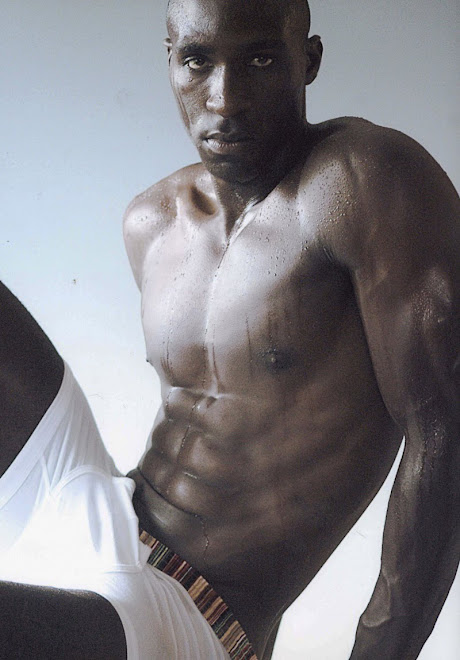
Otta Benga, Formerly Enslaved
The Epitome of a Nubian Knight

Otta Benga, Formerly Enslaved<br>The Epitome of a Nubian Knight

Followers of Nubian Knights Network
"Thanks For The Support Everybody!!!"

QUOTATIONS OF "BLACK"

"Whenever I use BLACK it relates to some history of Africans in that particular place. It’s the idea of the color BLACK as a metaphor, or as a representation of African-Americans. It’s the notion of BLACK- BLACKNESS - and all its other meanings in relation to the history of race..."

- Fred Wilson


"Most of my fortitude to continue doing the work comes from the moral outrage I feel about the injustices that Black people endure disproportionately daily."

- N. Abdul-Wakil


"In the end, what matters is not skin shade but pan-African consciousness. Loving your complexion, your nose, lips, hair length and texture, no matter what the politics or trends decide, and simply be. That's the problem with us (African folks). We're still learning how to love ourselves. So used to glorifying others and putting others first..."

- Dredlocks Tree

The REEL Black Same Gender Loving Filmography Resource (A 24/7 ONLINE FILM DATABASE)

The REEL Black Same Gender Loving Filmography Resource (A 24/7 ONLINE FILM DATABASE)
Click The Pic To Access The Film Library Database! (166 Films)
LAST UPDATE: Monday, December 3rd, 2012
Showing posts with label Guest Nubian Knight. Show all posts

Wednesday, March 13, 2013

A Letter To My Same Gender Loving Ancestors
By Louis "Azucar Negro" Farmer


A Letter To My Same Gender Loving Ancestors

by Louis "Azucar Negro" Farmer

(A Guest Nubian Knight's Perspective)


I don’t know you, but I feel your presence.

You, my ancestors, the ones who loved the SAME gender.

You, my ancestors, who often were the ones that possessed the ability to communicate with the dead or offer spiritual harmony to family, tribes, villages, the physical and spiritual world. Yet, able to love the same gender with no questions or frowns.

You were respected, revered, considered sacred, admired, sought after, and most of all LOVED by our people.

You were called many spiritual names by others since the beginning of time, before slavery, during slavery and after slavery: sooth sayer, gate keeper, priest, priestesses, sangoma, elder, mambo, iya, babalao, houngan, mambo, santero, ialorixá, babalorixá.

I feel your magic, power, supernatural abilities, love for nature and animals in me.

Thank You!

You, like your other tribe members, were captured by the so called “God Fearing Europeans” and by our very own misguided, greedy and foolish hearted brothers and sisters.

You also had wives, husbands, boyfriends, a mother, a father, siblings, aunts, grandmothers, grandfathers and clans. How did you keep their memories as you were torn away from them, never to see them again?
 

You, my ancestors, loved the same gender before the identities to ‘explain’ who and what we are were given to us. Yes, there was a time before we felt the need to identify as
‘Gay’
‘Queer’
‘Homosexual’
‘Bisexual’
‘Transgender’

Some of these words  make many cringe, while others celebrate being associated with them.

Some have found solace with the various sexual identities, while others have fallen further into an emotional hell because of them.

You must be shaking your heads while seeing many of us follow more of an often constricted, culturally insensitive and manipulated sexual identity  while  wandering aimlessly, spiritless and empty seeking approval and acceptance from others who give less than a damn about us, your children.

You, my ancestors were in the bowels of the slave castles, asking yourself, like the others around you “why?”

Both men and women regardless of sexual orientation were raped at the hands of savages who saw themselves as saviors spreading the word of Christ or Allah.

Many of you fought, more died and countless survived the Middle Passage.

How did you do it? How did you deal with a once alive but now dead body chained to you on the ship headed to the new world, as it rotted and gave a toxic odor in front, behind, above and below you? How did you deal with seeing your brothers and sisters die one by one on a ship bound for the new world? How could you stomach the scraps and moldy food given to you for nourishment while smelling feces, urine, puss, blood, vomit and peeling flesh?
 
How did you my ancestors, handle strange hands touching your body, every crevice being  pulled, tugged, pinched, sometimes burned?

How did you keep faith, or did you lose it?

No, you didn’t lose faith because the Orishas and Loas came with you during this horrible, heinous, and soul wrenching trip. Many African Gods and Goddesses wept with you. And many more spirits sank to the bottom of the ocean with the dead Africans thrown off of the ships, as well as those that chose death over slavery, and jumped to the depths of the ocean to be in the arms of Olokun, Yemaya, Mami Wati, Agwe, La Sirine and many more.

My same gender loving ancestors what was it like to be pulled up from the hull of the ship to a new land? I can only imagine what it was like to see a sea of White smiling faces surrounded by angry, sad, sullen and strong Black faces.

How did you handle being forced to worship a God that looked nothing like you? When the Catholic priests threw ‘holy water’ on you as you marched in a line chained to one another and branded, were you confused? What went through your mind as your  natural beliefs had to stop or be hidden behind Catholic saints?

Were you angry or did you laugh at the idiot slave masters who had no clue that you were indeed establishing another way to preserve OUR Gods and Goddesses?

I have read many slave narratives that many of you left. Often the meanings about same sex relationships were discussed in secret and hushed tones. When you talked of slavery you probably already felt that discussing being a slave was enough, let alone discussing loving the same gender to a Christian White person recording your experiences.

I know that many same gender loving men were forced to fuck, suck and feed their male masters.  Oh the anger I feel for ALL of my people.

I know many of you lived openly in a same gender relationship, living together as a couple. Oh yes, it was documented. Yet, many don’t want to believe it.

How horrendous was it for my female same gender loving sisters alongside with their straight sisters to be treated as cattle, forced to “breed” with and/or marry men.  I know that many of you were raped mentally, sexually and physically just like your non same gender loving people at the hands of overseers, masters, mistresses, owners, slave traders and slave catchers.

But I also know many fought, maimed and sometimes killed those that dared to touch you!

What was it like my same gender loving ancestors if you were deemed effeminate or soft by your master and made to be a house slave? You had to have been upset, hurt and angry. But this is not to say that some of you weren’t field slaves too.

How did you, my more masculine male and female same gender loving ancestors, handle often being a field slave because you were deemed to be a stronger ‘buck’ or ‘wench’, when often your ‘lover’ was in the big house, or even working next to you picking cotton?

Are you upset that so many so called Afro centric speakers and writers today dismiss your existence during slavery, minimize your presence or claim that White people ‘made’ you gay? I can only imagine what it was like for you to hold your head up high as you long to be next to the one you love, while being forced to ‘make babies’ with a stranger and not losing your mind when the children are sold away, abused or even killed.

You were clever my same gender loving ancestors when many of you used the bible to free your people. You were called preacher, prophet, minister and other names. Dispensing advice, solace and encouragement to your flock.

Yet, still a slave.

When you ran away with your boyfriend or girlfriend, holding hands in the dark, avoiding the slave catchers with their barking dogs, how did you know to wrap hot peppers on the bottom of your feet and on your clothes to throw off your scent from the dogs pursuing you?

How did you know how to make the Voodoo bags called gris gris to protect the runaways including yourself from being caught?

How did many of you feel participating in slave rebellions and dying for freedom?
 
My same gender loving ancestors, I have vivid dreams about being a slave. I have visions of being at a camp fire and instructing others what to do as we plot our escape. I have also had dreams of being a slave and sold away as a teenager screaming and begging to stay. I have had dreams of running away for freedom with a blue black muscular man, who loves me with all of his heart, both ready to die for our love and our freedom.

Are you trying to send me a message?

Is it to not……….forget?

I shall not.

I shall not.


Wednesday, October 17, 2012

Joe Pressley's Community Vision For GMAD...
Renewal Into The Next 25 Years


Community Vision
 
 by Joey Bernard Pressley

(A Guest Nubian Knight's Perspective)


The recent resignation of Tokes Osubu from New York City’s Gay Men of African Descent (GMAD) has prompted me to think very seriously about the future of the Black gay/same gender loving (SGL) community and the vision needed to confront and address our needs as we work to move forward.  It has also generated my interest in becoming GMAD’s next executive director.  A position for which I would consider applying the moment the organization’s Board of Directors elects to initiate its search process.  

I’ve read that GMAD founder, the Reverend Charles Angel, was a tireless, outspoken and fearless activist who stood in the forefront of several organizing efforts in the New York City gay and people with AIDS communities including, the National Coalition of Black Lesbians and Gays, ACT-UP, and the People with AIDS Coalition. In those Silence = Death days, he understood the vital importance of advocacy, a clear vision and establishing a set of goals for addressing a community’s broader needs. It was a holistic approach to activism rooted in a proud African heritage, progressive Christian teachings and his belief in psycho-spiritual growth.  It was from this set of beliefs that GMAD grew, and continued to grow even after Charles Angel’s untimely death from AIDS complications in 1987, three years before I discovered GMAD via its Friday night forums.  These forums often brought a hundred or more Black gay men to The Lesbian and Gay Community Services Center in Greenwich Village.

Organizations such as GMAD, many of which are more than two decades old, were founded as psycho-social-political entities designed to celebrate and empower Black gay/SGL men. GMAD employed its holistic approach to create a much needed safe space for its constituents to look at the intersecting issues in our lives.  In the 1990s, these well-intentioned organizations sought funding to combat HIV/AIDS. This shift transformed them into AIDS service organizations that, by necessity, narrowed their scope and vision.  As the unpaid director of GMAD in 1991, I was involved in securing one of the first grants for the organization thinking that it would create a pathway to growth and facilitate a greater response to the devastation levied by AIDS on our community.

Given this ongoing devastation, it stands to reason that our organizations must maintain a powerful response to the epidemic; however, being pigeonholed as only an AIDS service organization restricts the ability of Black gay/SGL institutions to effectively speak for and to the myriad needs of their constituents. Black gay/SGL men are as concerned about employment as they are about HIV prevention and treatment. We are concerned about the impacts of climate change and hate crimes, a woman’s right to choose as well as marriage equality and our presence in the military.  Black gay/SGL men are equally concerned and impacted by lack of access to healthcare, education, housing, criminal justice issues and income inequality.  Working with faith-based institutions, combating stigma, homophobia and addressing the social, economic and behavioral cofactors related to the rise in HIV/AIDS infections will be ongoing work for GMAD.  At the same time, I see GMAD standing shoulder to shoulder with other progressive organizations working in coalition to promote a fairer, more just society and world.

Our organizations need new funding streams that will enable us to become active participants and thought leaders in these arenas.  As an expert in community organizing and policy analysis, with years of experience in organizational management and fund raising, I would seek to diversify GMAD’s revenue supports so that its efforts would reflect the broader needs of its constituents. An initial first step moving forward is for GMAD to engage in a strategic planning exercise designed to assess strengths and weaknesses and to redefine its vision and related mission. Stakeholders engaged in this process would include past and current staff and funders, policymakers, community leaders and of course a diverse representation of New York’s Black gay/SGL men. The organization would work directly with Black gay/SGL men via ongoing participatory engagement to develop agendas and strategic plans reflective of the community’s priorities and work with legislators and public officials to shape policy and legislation responsive to identified needs.

I recognize that this vision is broad and ambitious, but it is also one of more personal concerns.  I think about my 9 year old nephew.  What if he shared with my husband and me that he is gay?  What world would he face?  Simply put, I would want our society to embrace and support him.  I would look to GMAD, and organizations like it, to stand without equivocation or shame in demanding that all of us, including my dear nephew, have the equal and unmitigated opportunity to celebrate our lives, and have the space to act as partners in bringing about transformative social, economic and political change.
    
Respectfully,

Joey Bernard Pressley
(October 16th, 2012)


Monday, September 10, 2012

New Film On ADODI Filmed Partially in Philadelphia, PA (On Saturday, September 8th, 2012) As Filmmaker ROD PATRICK RISBROOK Visits... by Tracy Gibson


New Film On ADODI Filmed Partially
in Philadelphia, PA
As Filmmaker ROD PATRICK RISBROOK Visits...
 by Brother Tracy Gibson

(A Guest Nubian Knight's Perspective)


A dozen courageous Black Same Gender Loving men came together at the Songhai City Cultural Center at 3117 West Master Street {The heart of North Philadelphia}, to pay homage to Brother Rod Patrick Risbrook's new documentary: "ADODI - 25 Years And Beyond: Claiming the Legacy, Continuing the Legend...'' The film is set to be released in August of 2013.

The film tells the story of ADODI --a support group for Black men who are Same Gender Loving and who refuse to be stereotyped, categorized and put down, but who insist on being treated--and treat each other--with dignity, respect, LOVE, kindness and as men of Tomorrow today. Men who are and will lead our people in a positive direction and men who take responsibility for their sexual activities and actions, deciding to act as responsible adults--not immature children.

ADODI was founded in May of 1986 by Creative Arts Therapist Clifford Rawlins, also an artist, who opened his home to create a warm and loving atmosphere each week on Sundays, that helped nurture and educate literally hundreds of Brothers through the beginning stages of the AIDS / HIV Crisis. Clifford held us spell-bound during those heady early days as we were surrounded by his fantastically gifted art work, the art work of other Black artists and luscious jazz music as we learned survival tactics, and techniques to help us build vital self-esteem that would carry most of us on into another millennium and another generation. Many more of us would have perished if it had not been for ADODI.


A brief trailer of Brother Risbrook's film was shown at this recent gathering of men and the courageous attending Brothers took the time to talk about the up-coming National election and how they think President Barack Obama will fair; the history of the Black man and the Black woman in business; The history of the Black church movement in Philadelphia; the expectations of Blacks in the Arts and film; the potential of this particular film and how it was conceived; the vast potential for a new Black Renaissance that will not only lift Black people locally, but lift our hearts and spirits as a Black Diaspora internationally. There was also talk of the White Male's penis envy of Black men.


The event was sponsored by the Black Millionaires Network and offered a chance for the filmmaker, a good Brother from Brooklyn, New York, to discuss his film {which is still in production}, and meet with some of the people that are part of the heart of its' creation--The ADODI Brothers themselves. {Earlier in the day, three ADODI Brothers, including myself, were interviewed on film as part of the production}.... The Brothers who attended this event had the courage to not be defined by there own fears nor by their supposed oppression, nor by the exclusivity, marginalization, discrimination and homophobic attitudes we often face from our own Black community and even our own Black families and Black churches. We had the courage to move forward and attend an event in the heart of North Philadelphia which is stereotyped as a violent, miseducated and oppressed neighborhood when in fact while there may be some aspects of North Philadelphia that are like that, there are and always have been Brothers and Sisters in North Philadelphia who have struggled for decades to improve the schools, improve living standards and improve the lives of Black North Philadelphia residents.


There were 38 empty seats at this event, but they were filled by our Ancestor's strong forthright, forward-moving and supportive spirits as the night went on and everyone enjoyed each other's company and the delicious vegetarian food prepared by Sister Atiya Ola, who catered the event and who owns a vegetarian restaurant at 4505 Baltimore Avenue in West Philadelphia...

When the film is released, this writer plans to help the producers and director get it seen widely throughout the country because the story of ADODI is close to my heart and it is a story that needs to be told.


SPECIAL THANKS
To Ado Ernest Duncan
For Taking The Photos
& Shooting The Video Interview

Tuesday, September 13, 2011

9/11 And The Task Of Healthy Grieving
By Victor R. Pond


©9/11And The Task of Healthy Grieving
by Victor R. Pond, Director of Policy, Research and Community Health, GRIOT Circle, Inc.


(A Guest Nubian Knight's Perspective)


One local paper’s headline read “A pain that won’t ease 10 years.” On this 10th Anniversary of that fateful 9/11, as a nation, we once again rehearse the recalcitrant memories of that dark day. Audio-visual images faithfully recorded, won’t allow us to forget, delete or edit those memories. We remember the rivers of tears, the ash covered screaming bodies running fueled by terror. We remember the chocked air, the nightmarish clouds of debris. We remember the collapsing towers. We remember those that perished and we also remember those who survived, yet may still bare the guilt of surviving. Not only are these memories fresh and raw, but our collective emotions are still dragging themselves to that place of redemption.

I can’t imagine what life has been like for those hundreds, if not thousands, who lost loved ones, friends and colleagues on that day. I was living in Chicago at the time when it happened. There I was at the gym heading to the locker room when I glanced over at one of the TV monitors only to have my attention arrested by the image of a seriously wounded Twin Towers. The billowing fiery smoke didn’t elicit a major concern. I comforted myself in believing that whatever it was, the FDNY could handle it. Yet, this was different. Personal. I didn’t have the luxury of an emotionally detached gaze. For five years I worked at 225 Broadway on the 21st Floor and there we had a direct view of the Towers. I was in those buildings virtually every day for one reason or another. Even on weekends. The images projected on those flat screen TV monitors had an eerie resemblance to disaster scenes I had seen in several catastrophe themed movies. So I stood there wishing this was really a movie scene…..nothing more.

Then the unspeakable happened. Like the walls of Jericho, the twin symbols of Western progress and prowess came crashing down. Workout was cancelled. Not sure how I made it home, but I did. I sat on my sofa for hours, immobilized. The TV was on and I was gazing at a tapestry of frantic reports and reporters. The days following were simply strange to say the least. I knew I had to journey back to NYC not only for a multi-sensory experience, but to join in the chorus of grief and loss. A little over a month later, with my courage in place, I found myself downtown engulfed by the overpowering combined smell of still smoldering metal and pulverized concrete. Then there was the bizarre stage ornamented with mangled ruins and ashy soot covered buildings. I stood there mesmerized unable to even imagine that proverbial light at the end of the tunnel. Disbelief merged with anger. Anger and sadness colluded with rage.

As a “visitor” I couldn’t help but notice how people walked around seemingly dazed. There was an unusual exhibition of politeness, even in the NYC subway constellation. The very atmosphere was that of a city remarkably tamed, struggling to climb out of the heaving sadness. In many ways we still struggle. Perhaps the greater hurdle of crossing that bridge back to life is believing that it’s possible or even necessary. Those of us that made it through the AIDS Crisis of the 80s know far too well the countless disruptive eulogies laden with their conundrum of grief. How many did we helplessly watch die? Hundreds, thousands? Not to mention, what seemed like endless funerals had become the new normal.

9/11 is replete with lessons for us all to heed and apply. As we embark on this now yearly open ritual of remembrance for the victims of 9/11, we still face the morbid challenge of re-framing our cultural avoidance/dance around death and the dead. Despite all our religion and science, death and dying remain taboo topics for the most part or at best are relegated to science fiction or horror movies. It’s high time to call the mainstream media to task for its self-serving coverage of this story that continues undermining the tragic loss of people of color. Even on that day, reporters could only find Whites to interview.. really?...to hear the testimonies on non-Whites one had to tune to Univision or BET. While we [people of color] have learned to accommodate this systematic revisioning of history, rendering us invisible, it simply keeps adding salt to wounds that for many remains open. This certainly can’t be good for ushering us into a united process of healthy grieving particularly when our grief and loss are relegated to footnotes.

I believe that in order for these recycled 9/11 rituals to have any healing powers that go beyond mere symbolism, we first have to “democratize” our [national] grief not merely set up hierarchies for it. Has anytime ever been set aside to grieve the Middle Passage? We’re talking about millions, not thousands of lives swallowed up in that watery grave. The fact that in all probability we will never know their names or see images of their faces, does not give us permission to ignore that event that despite being swept under the rug of historic revisionism, stubbornly continues haunting us like a restless ghost.

What makes 9/11 paralyzingly traumatic is not so much the loss of thousands of lives. The world is used to witnessing that and in much larger numbers. It’s the ugliness of its symbolism: the slap in the face by the “naked” dwarf, unhinging the national pride of the armored giant. It is the personification of a “low tech” assault on the impregnable kingdom. It was also a violent jolting of the “new world order” doctrine pillaging its tenets. So here we are ten years later, still stuck it seems, somewhere in the middle of anger and depression (or is it rage and self-loathing?).

People need to embrace, not run from the pain that comes with loosing loved ones (even strangers) particularly at the hand of circumstances way beyond anyone’s control. Truth is, we don't "get over" grief; we learn to carry it. Unfiltered, unprocessed grief does not magically inject us with emotional and/or psychic anesthesia. Grief experts tell us that unresolved grief can result in depression, apathy, addictions, overworking, compulsive/aggressive behaviors, chronic physical symptoms and progressive social isolation. Worst, it can ultimately result in a turning off of the lights in ones life.

This could well be a good time as any for mental health professionals, clergy and elected officials to lead the way in infusing our cultural landscape with the messages that healthy grief is essential for a productive society. People have to be taught how to grieve, how to let go and how to access resources/support to aid in reintegrating their brokenness. This is certainly no time for blind fanatical patriotism. It is though a time for renewed allegiance to being there for each other as we face current and future tragedies, whatever shape or form they may show up.


Thursday, June 10, 2010

Sanctified Bigotry by Victor R. Pond


Dear all,
I was inspired to write this in response to so much hate and bigotry I see spewd in churches and society towards those considered "less than"......This is really a lament.

--
Victor R. Pond


Sanctified Bigotry
by Victor Pond

(A Guest Nubian Knight's Perspective)


When the wounded cry
you feign deafness
immune to the horror
laying at your feet
instead you step over it
not looking back
less it assault the sieve
that replaced your heart.

When the wounded cry
your mercy slither away
leaving the aching body
to desiccate and die
and with a smile
birthed in your own agony
you dust the guilt
from off your shoulders
convincing yourself
you are worshiping Jehovah.

When the wounded cry
your loathing blossoms
ornamenting your scattered compassion
.....so how would you answer
when God asks you
“why didn’t you love your brother?”

Tuesday, May 4, 2010

PDA (Public Display of Affection) As A Resistance Strategy


PDA (Public Display of Affection)
As A Resistance Strategy

by John-Martin Green

(A Guest Nubian Knight's Perspective)


Regarding the use of Public Displays of Affection as a Same Gender Loving Liberation Movement resistance strategy, no one is saying that brothers should be slobbering all over each other on street corners. But, that we should have the right to is undeniable.

Last weekend (Friday, April 23rd, 2010) we (BMX-NY) conducted our first PDA As Resistance Strategy: Fighting for the Right to Be workshop. There, I suggested that, “Part of the reason many of us find it so hard to find and love and be with each other is because we spend so much time standing outside of acknowledging and being who we really are."

In doing so, we have given other people permission to nullify us, to invalidate us, to neuter us. If heterosexual Black men are “real men,” it is not because they are stronger or otherwise better male specimens than we, but because we are false. We are not true to ourselves. We do not observe the courage to express, indeed, to honor our natural inclination – to be who we really are. So we are fake men. We are fake men every time we cower in the face of our natural attraction to each other, our natural affinity to each other, our natural tendency to admire, appreciate and show affection to each other. Those feelings are real, and we are fake every time we deny them.

Worse yet, we are cowards. When we accept living shut down and cut off from our libidos, we render ourselves eunuchs in the world, having accepted our castration. Is it any wonder that we don’t find each other? Or that, as we do, we rarely manage to stay with each other? After all, who wants to be with someone who doesn’t want to be who he is? Or, who doesn’t know who he really is? Or, who is afraid to be who he is?

I want a “real man” too. But, if what they say is true about likes attracting, then I need to be one, if I’m going to pull one.

Gay identification can not be the key to the kingdom of real-man-ness in the Black community. “Gay” is a substitute for agency as a homosexually-wired Black man. Manhood is bestowed by one’s culture, and the cultural bearings undergirding gay identification are distinctly Eurocentric. That is why it would be useful to acquaint ourselves with the cultural iconography and values attendant to SGL identity.”

The reason why the Gay and Lesbian Liberation Movement has gained such extraordinary traction in the past generation has to do with that movement’s having taken strength from its cultural bearings. It is no accident that, for the first time in the history of this nation, same-sex headed households are counted in the current census; or that the President has pledged to overturn the Don’t Ask, Don’t Tell military policy and made it a priority of his administration; or that same-sex marriage is the new law of the land in a half dozen states and counting. Undoubtedly, these are marvelous, eureka-style, hosanna lauding leverages the movement has achieved. However, while we too can benefit from these advances, we should ask ourselves whether these are rights most pressing to us as individuals and as a community?

It is our culture which endows us with our identity. Our cultural identity endows us with our sense of collective entitlement as citizens of our society. Our entitlement spurs us to claim our citizenship privileges. In the same way that we honor ourselves as African or Caribbean American, or Latino, our sexual identification is an aspect or extension of our culture. If we understand that same gender loving experience is an intrinsic facet of everyday Black life, then it is incumbent upon us to respect and celebrate it thusly. We have yet to clearly define which privileges are most pressing to us – let alone how we will go about getting them. Let’s get a move[ment] on, shall we?


John-Martin Green is co-founder and Executive Director of The Black Men’s Xchange-New York (BMX-NY), an empowerment organization of same gender loving (SGL) and bisexual African descended men which works to bridge gaps and build dialogue and community with the larger Black community. BMX-NY is a pro-Black organization built on a philosophy that embraces same gender loving experience as an intrinsic facet of everyday Black life. Integral to BMX-NY’s approach is the understanding that, in order to decrease internal and external homo-reactionary thinking, and demystify differences around diverse ways of living, loving and being, homosexual, bisexual and transgendered Black people must engage in supportive dialogue with each other and the community.


John-Martin is also Co-Founder and Co-Artistic Director of Blackberry Productions, Inc. Theatre Company (BP). Through BP John-Martin creates original theatre that reflects untold stories and history of African Americans, and uses the arts in schools and community-based-organizations to nurture the cultural health of our communities. An important facet of the cultural work John-Martin and his cohorts have undertaken lo the past twenty-five years lies in excavating the history and culture of Africans in the Diaspora, towards reconnecting us with ourselves. As we remember who we are, we are empowered to act as agents in our own struggle, our own progress.

As an educator, Mr. Green was a Co-founder and Co-Director over a decade, of Changing Scenes, an OBIE Award winning arts-based crisis intervention program for juvenile offenders. There he created a theatre workshop wherein participants explored their relationship to issues of human needs, power , control, self-concept, personal responsibility and societal expectations. At the Young Adult Learning Academy with BP, Mr. Green helped create interdisciplinary arts-based curricula that sparked creativity and receptivity to learning. Mr. Green has taught theatre at New School University, Brooklyn College, and SUNY campuses at Old Westbury and Nassau Community College.

He holds a BFA in Drama from Bard College and an MFA in Directing from Brooklyn College.

Tuesday, December 29, 2009

e-Celebration of KWANZAA:
Good For You (ROD)
My Heart Just Wasn't In It This Year


e-Celebration of KWANZAA:
My Heart Just Wasn't In It This Year
by N. Abdul-Wakil


(A Guest Nubian Knight's Perspective)


Peace, Rod:

I see that you moved ahead with e-celebration of Kwanzaa via posts to your blog. Good for you. My heart just wasn't in it this year.


Perhaps, it's the cumulative effect of having lived in the ghetto of Bed-Stuy for over three and a half years. I feel good that my voice for progressive movement is heard by a handful of people online. However, I don't even have to leave my apartment to be aware that my activism only creates one small air bubble surfacing among the relentless tide of ignorance that is eroding the coasts of this nation in daily massive waves. No one hears the faint calls for social justice, black nationalism, or reminders of the lessons taught by our great, martyred leaders of the twentieth century. No one hears above the mobile phones plastered to their ears. No one hears through the black, blonde or "ghetto fabulous" loud pink, horsetail-hair helmets that two thirds of Black women don daily to compete for attention among the dwindling number of straight Black men temporarily on the streets between jail terms. No one wants to hear about how their use of the "N" word denigrates their racial self-esteem (and passes it along to their children). It's not as though this is racial self-hatred. This is a hip form of camaraderie. It must be. They see usage of this word affirmed by music videos and popular films. No one even gives a hoot about recycling (which is the law). Why should they? Hasn't it always been easier to just throw the empty liquor bottles and cans out the window? Surely, it's better to do this than to risk everyone in one's building noticing the overwhelming number of vodka bottles in the recycle can. By throwing trash out the windows it's easier to wallow in the denial that no one knows what building residents have drinking problems. Right?

Saturday, September 12, 2009

One Black Gay Man's Take on Marriage Equality
By Steve A. Williams
(A Guest Nubian Knight's Perspective)


One Black Gay Man's Take on Marriage Equality

by Steve A. Williams

(A Guest Nubian Knight's Perspective)


Unlike many Black gay and same gender loving (SGL) men I believe in marriage equality- plain and simple. Many Black lesbian/gay/bisexual/trans/queer/same gender-loving (LGBTQSGL) people say there are other issues more important than marriage equality. Housing, education, health, violence are always the issues that are mentioned when the subject comes up. But when I ask why is there no agenda to address any of these issues in our community, I generally get no response other than there are more important things to deal with.

I think the lack of an agenda is a reflection of the lack of leadership in the Black LGBTQSGL community. Few of the issues raised by Black gay folks who don't support marriage equality are on the radar of most of our institutions. There is little past the ongoing cry for more dollars to fight AIDS which is a battle we are losing if you consider the statistics. Those of us who want marriage equality are not opposed to fighting hate crimes, combating poverty, or AIDS. Some say the absence of Black LGBTQSGL folks in news coverage of rallies and protests is an indication marriage equality is not a priority for us. We [Black folks] know all too well how selective the media can be when it comes to fair and accurate representation. Faces of color are often left out of the equation. However there are Black LGBTQSGL folks in the trenches fighting for the right to marry. The documentary "Jumping the Broom" shows several Black same-sex couples who discuss their desire to marry. There is also the Jordan/Rustin Coalition in California. Their website states, "The group was envisioned to engage the African-American community to work on marriage equality while building a movement of LGBT African Americans and allies who are committed to grassroots organizing." So, I don't buy the argument that we are not interested in marriage.

My support for marriage equality is not about validation. Nor do I see marriage as a preferred state of being. I just want to be treated as much an equal for my orientation as I do for the color of my skin. I am particularly dismayed that AIDS has not made Black gay men more keenly supportive of the right to marry. Many of us who have lost life-partners have also been victimized by the relatives of those loved ones in our time of grief. Relatives have intruded into the lives we built and homes we made, disregarded final wishes, challenged wills, even left some of us homeless. Who would not want protection from that?

And perhaps this is where the problem with marriage lies for us. Marriage means recognizing ourselves and relationships in very different ways. Marriage may be a whole new level of coming out we have not anticipated. And coming out means combating internal and external homophobia. Perhaps this is why so few of our leaders are in support of marriage equality. Maybe our leaders are wrestling with what family really means as many of us are. Maybe our leaders are leaving their life-partners at home during the holidays. And it is one thing to have your folks accept you as gay, bi, whatever. It is certainly another to have mom and dad be happy for you when you call and say your same-sex partner just proposed on bended knee.

As more states adopt laws providing the right to marry for LGTBQSGL people, those of us who want those protections now will become even more present, more out in the larger community. We will talk more openly at the water fountain about how we spent our weekends; we will hold hands in our places of worship, we will be more demonstrative of our love in public. There may be a kind of spill-over effect where Black gay folks who are out in some areas of their lives will be encouraged to be out in every corner of their lives. With the law on our side we will stand up for our rights and seek legal recourse in the face of discrimination. We will see ourselves as fully entitled. This process of re-conceptualization will cause us to view our lives and choices differently. We will want the same regard that is afforded our heterosexual relatives when they marry. We will require a seat at the table for our partners and invite our relatives and friends to share in our own rituals in our own homes. Marriage equality could be the beginning of the normalization of our own liberation to ourselves.

Rather than establishing hierarchies around our needs, Black LGBTQSGL people should consider what relationships exist between marriage equality and other issues of concern and consider what impact marriage equality may have on those issues. Again, I am not advocating everyone get married. Just that the rights and responsibilities that come with marriage are connected to some of our other needs and can be used to facilitate the justice that is our right as citizens.

September 11, 2009

Saturday, July 4, 2009

I Loved Michael, But, I Don't Think he Did


I Loved Michael, But, I Don't Think he Did
by John-Martin Green

(A Guest Nubian Knight's Perspective)

We've lost Michael.
Michael, the seventies singing prodigy who grew into the most visionary musical performer of our generation. Michael, who scaled untold heights of popular culture, rewriting the record books. Michael, who sang and danced his way into the hearts and souls of men women and children the world over.

I am torn about his departure. It strikes me that he left us a long time ago, actually. His retreat may have begun as long ago as the time of the infamous Pepsi commercial twenty-five years ago at which point he was said to have commenced his addiction to pain killers. Having been alcohol and drug addicted myself, I can attest to the fact that, when one is so afflicted, one is not really present. Perhaps it began a few years before that, with his first plastic surgery.

He was clearly a genius - a tortured genius. It frustrates me when I think about the extent to which, brilliant as he was, he seems not to have wanted to be who he was. It vexes and perplexes me that, with unfathomable resources and access to information - including African and African American History, all manner of progressive spiritual restoration models, and the best psychological support services the world has to offer - this uber-gifted man seems never to have opted to heal himself - to deliver himself of the self-hatred by which so many of us are stunted. For even a little of the incalculable psychological support of which he might have availed himself, he may not have had to remain psychologically trapped in boyhood.

While it is likely that the adults with whom he surrounded himself may not have been wont to challenge him to seek out help for fear of being dismissed, I can't imagine people like Quincy or Stephen or Diana being so cowered. Was there nobody pulling his coat? Nobody at all? If so, that's a tragedy.

Writers have conjectured about Michael's changing his appearance so radically so as to remove any traces of his father from his appearance. While he may have harbored some antipathy for his father, I think it's safe to say he learned his relationship to manhood and to Blackness from his father. His desire to escape the bonds of manhood and Black manhood were so intense that he went to extraordinary lengths to transform his physical self into something else. On a Larry King show one night this week, film director, John Landis told how, in approaching
him to direct the Thriller video, Michael told him, 'I want to become a monster.' Before his final departure, he would seem to have come very close to achieving that goal.


Well, in the end, we have his brilliant musical legacy to treasure.


____________________


John-Martin Green is Co-founder and Executive Director of The Black Men’s Xchange-New York (BMX-NY), an empowerment organization of same gender loving (SGL) and bisexual African descended men which works to bridge gaps and build dialogue and community with the larger Black community. BMX-NY is a pro-Black organization built on a philosophy that embraces same gender loving experience as an intrinsic facet of everyday Black life. Integral to BMX-NY’s approach is the understanding that, in order to decrease internal and external homo-reactionary thinking, and demystify differences around diverse ways of living, loving and being, homosexual, bisexual and transgendered Black people must engage in supportive dialogue with each other and the community.

John-Martin is also Co-Founder and Co-Artistic Director of Blackberry Productions, Inc. Theatre Company (BP). Through BP John-Martin creates original theatre that reflects untold stories and history of African Americans, and uses the arts in schools and community-based-organizations to nurture the cultural health of our communities. An important facet of the cultural work John-Martin and his cohorts have undertaken lo the past twenty-five years lies in excavating the history and culture of Africans in the Diaspora, towards reconnecting us with ourselves. As we remember who we are, we are empowered to act as agents in our own struggle, our own progress.

As an educator, Mr. Green was a Co-founder and Co-Director over a decade, of Changing Scenes, an OBIE Award winning arts-based crisis intervention program for juvenile offenders. There he created a theatre workshop wherein participants explored their relationship to issues of human needs, power , control, self-concept, personal responsibility and societal expectations. At the Young Adult Learning Academy with BP, Mr. Green helped create interdisciplinary arts-based curricula that sparked creativity and receptivity to learning. Mr. Green has taught theatre at New School University, Brooklyn College, and SUNY campuses at Old Westbury and Nassau Community College.

He holds a BFA in Drama from Bard College and an MFA in Directing from Brooklyn College.